
From New York Decline to Iowa Rescue
Big BrotherThis flow reconstructs the material and professional losses that preceded Edison’s arrival and shaped the crisis he concealed.
increasing Bearing strength in each event
 decreasing
Bearing strength in each eventdecreasingEarly Recognition

A Promising Departure
A young musician
Edison leaves for New York at seventeen with little money and a fierce belief in his future. His talent and confidence lead to notable work and performances alongside established musicians.
Success becomes identity
His early opportunities reinforce the idea that he is exceptional and destined for wider recognition. The belief is not baseless, but it leaves him poorly prepared for a career in which talent does not guarantee lasting work.
Professional Isolation

A Reputation Narrows
The prima donna pattern
Edison admits that he walked off gigs and demanded ideal conditions, imitating some of his father’s self-important habits. He later recognizes the behavior as damaging, but the reputation has already made musicians wary.
Fewer opportunities
The most prestigious work becomes less frequent, while lower-paid club dates keep him barely connected to music. He continues to describe himself through earlier achievements, unable to accept how far his position has slipped.
Selling the Schimmel
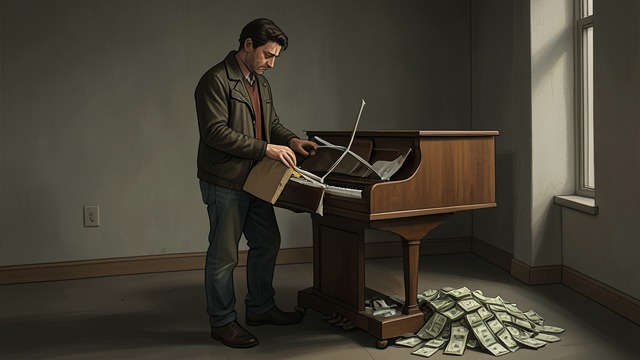
A Necessary Sale
Rent arrears
With rent unpaid and income unreliable, Edison sells his prized piano to keep himself afloat. The instrument represents both his profession and the life he believes he can still recover.
Money becomes food
He spends the proceeds on restaurant meals, describing the experience as having eaten the piano. The sale buys only temporary relief, while the loss of his central working tool makes professional recovery even less likely.
The Storage Auction
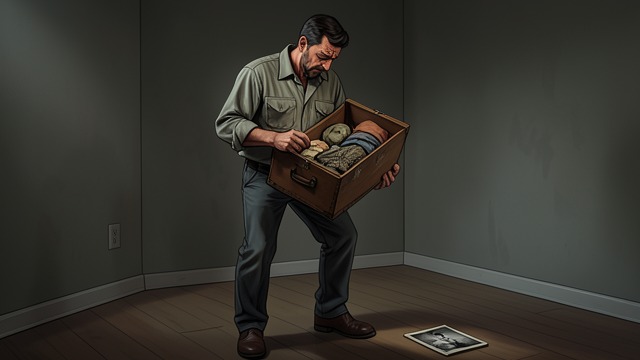
The Loss of Possessions
A missed payment
Edison falls behind on storage fees after losing his apartment. When he returns to negotiate, the unit has already been auctioned, dispersing his CDs, photographs, clothes, sound system, and family keepsakes.
Identity without objects
The lost collection had made years of work tangible to him. Its disappearance leaves Edison with little more than his current clothes and an aging computer, deepening the sense that his former life has vanished.
The Clubroom Collapse
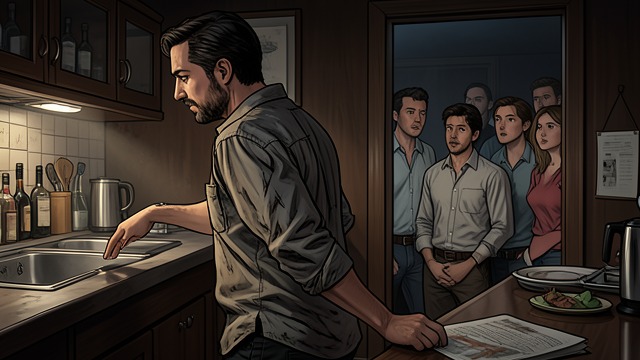
A Last Place to Stay
An informal exchange
Friends arrange a room above Three Bars in Four-Four, where Edison cleans after closing in return for shelter. He can also practice on the club’s piano and sometimes play with musicians who gather there.
Hospitality exhausted
Edison begins taking food from the kitchen after hours, and the arrangement ends. His friends have offered real help, but his compulsive eating and impaired judgment consume the last stable refuge before he turns to Pandora.
After leaving home as a teenager
By the mid-1990s and the years that follow
During Edison’s New York cash-flow crisis
The spring before Edison visits Iowa
Before Slack calls Pandora
